What's the Best Milk for Coffee?
Ask ten coffee drinkers what milk they prefer, and you will likely get ten different answers. At Elmfield Farm Dairies , we deliver the full range, from classic whole milk through to oat and other plant-based alternatives, so we get a genuine sense of what people are reaching for.
The truth is there is no single correct answer, since the best milk for coffee depends on how you actually drink it, whether that means a splash in a filter coffee, a creamy latte, or a bold, silky flat white.
This guide breaks down how different milks behave in coffee, so you can choose the one that genuinely suits your daily cup.
How Whole Milk and Semi-Skimmed Compare
Whole milk remains the classic choice for a reason. Its higher fat content gives coffee a rich, creamy mouthfeel and helps balance out bitterness, particularly in stronger coffee styles like espresso-based drinks.
Semi-skimmed milk offers a lighter alternative, still steaming and frothing reasonably well for those who enjoy milky coffee without quite the same richness or calorie content as whole milk.
Skimmed milk, with virtually no fat, froths into a notably lighter, airier foam, though many coffee drinkers find it lacks the body and sweetness that fattier milk brings to a proper cup of coffee .
Why Fat Content Matters for Frothing
Fat plays a genuine role in how milk froths, helping stabilise the tiny air bubbles that create microfoam, the smooth, velvety texture baristas aim for in a good latte or cappuccino.
This is exactly why whole milk tends to produce the richest, most stable foam, while skimmed milk, despite frothing up dramatically, often produces larger, less stable bubbles that collapse more quickly.
Semi-Skimmed vs Whole Milk: The Nutritional Trade-Off
Choosing between semi-skimmed and whole milk for coffee often comes down to balancing taste preference against a slightly lower calorie and fat content, rather than one being objectively better than the other.
Whole milk contains roughly double the fat of semi-skimmed, which translates to a noticeably richer taste and texture, but also a higher calorie count per serving, something worth considering for those drinking several coffees a day.
For most people, the difference genuinely comes down to personal preference, since both remain nutritious options and the calorie difference in a single splash of milk within a coffee is relatively modest either way.
How Oat and Other Plant-Based Milks Compare
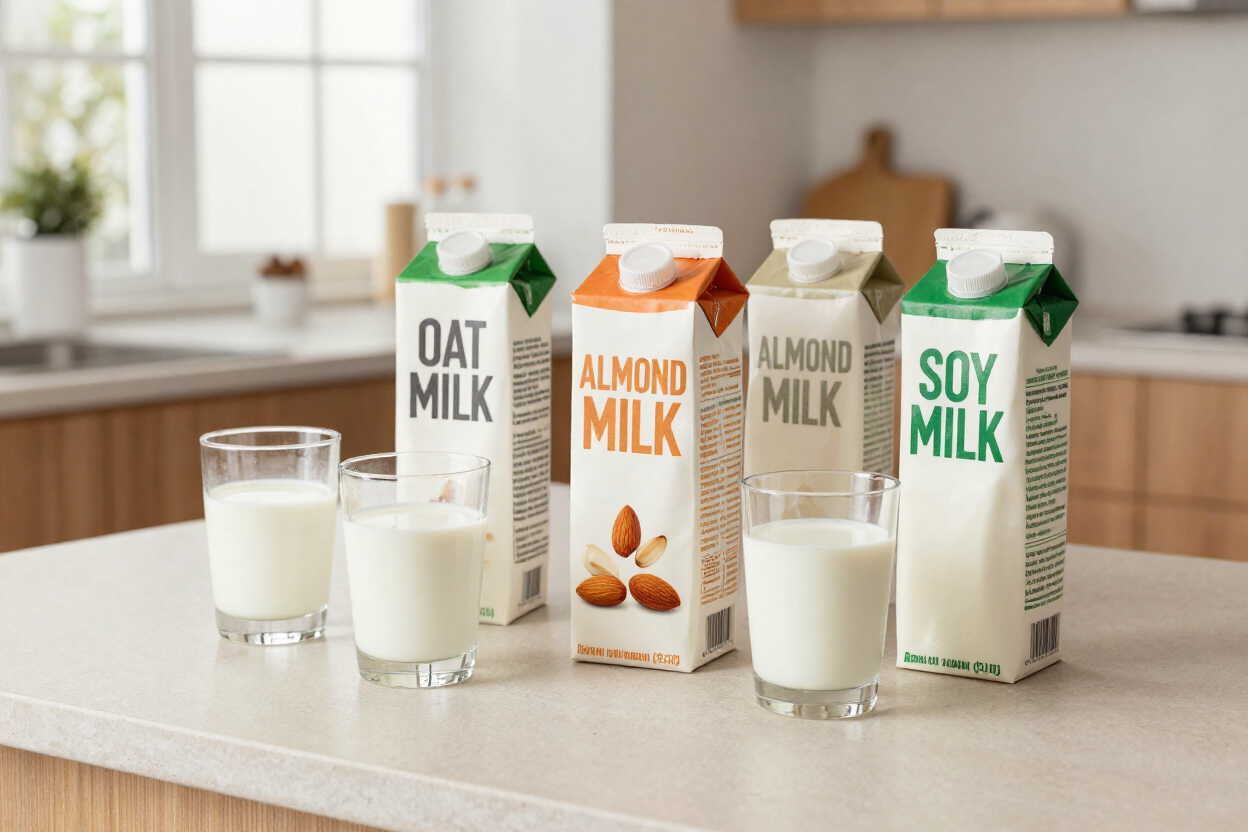
Oat milk has become an increasingly popular choice for coffee, partly thanks to its naturally creamy texture and subtle sweetness, which many people find pairs particularly well with coffee's natural bitterness.
Almond and coconut milk both bring their own distinct flavour profile to a cup, though they can froth less consistently than oat milk or dairy, and their thinner consistency sometimes struggles to match the body dairy milk naturally provides.
Soya milk has long been a reliable dairy-free option too, generally frothing reasonably well thanks to its protein content, making it one of the more consistent plant-based choices for milky coffee drinks. Our full range includes all of these options for anyone wanting to experiment.
A quick guide to matching milk type with your coffee style:
- Espresso or filter with a splash: whole or semi-skimmed milk
- Latte or cappuccino wanting rich, stable foam: whole milk or oat milk
- Lighter, lower-calorie coffee: skimmed milk
- Dairy-free with good froth: oat milk or soya milk
- Distinct flavour profile: almond or coconut milk
Barista-Style Versus Standard Plant Milks
Many plant milk brands now offer a specific barista-style version, formulated with slightly different proportions of fat and protein to froth and steam more like dairy milk, generally producing noticeably better results in coffee than standard versions.
If you are regularly making milky coffee at home with a plant-based milk, seeking out a barista-style version is genuinely worth it for a smoother, more stable result.
Frequently Asked Questions
Which milk froths best for a latte or cappuccino?
Whole milk generally produces the richest, most stable foam thanks to its fat content, though barista-style oat milk has become a strong dairy-free alternative that many coffee drinkers find froths comparably well.
Is oat milk healthier than dairy milk in coffee?
This depends on individual dietary needs and preferences rather than one being universally healthier. Both can fit within a balanced diet, and the right choice often comes down to taste, any dietary restrictions, and personal preference.
Why does my coffee taste different with skimmed milk?
Skimmed milk contains very little fat, which reduces the creamy mouthfeel and slight sweetness that fattier milk brings to coffee, often making the coffee's natural bitterness more noticeable by comparison.
Conclusion
There is no single best milk for coffee, only the one that suits your particular cup, whether that means the rich creaminess of whole milk, the balance of semi-skimmed, or the smooth sweetness of a good oat milk.
Elmfield Farm Dairies delivers a full range of fresh dairy and plant-based milk across Yorkshire, so you can find your perfect match without a trip to the supermarket.
Ready to try a new milk for your morning coffee? Get in touch with Elmfield Farm Dairies to place your order.
Blog